

« En tant que femme du Moyen-Orient, femme iranienne, je serai toujours un problème. Alors j’ai dit ok, si c’est ce que vous voulez, j’en serai un »
As a woman, an Iranian, a middle eastern woman, I’ll always be trouble. And then I said ‘okay, if I’m trouble for you, yes that’s what I am’.
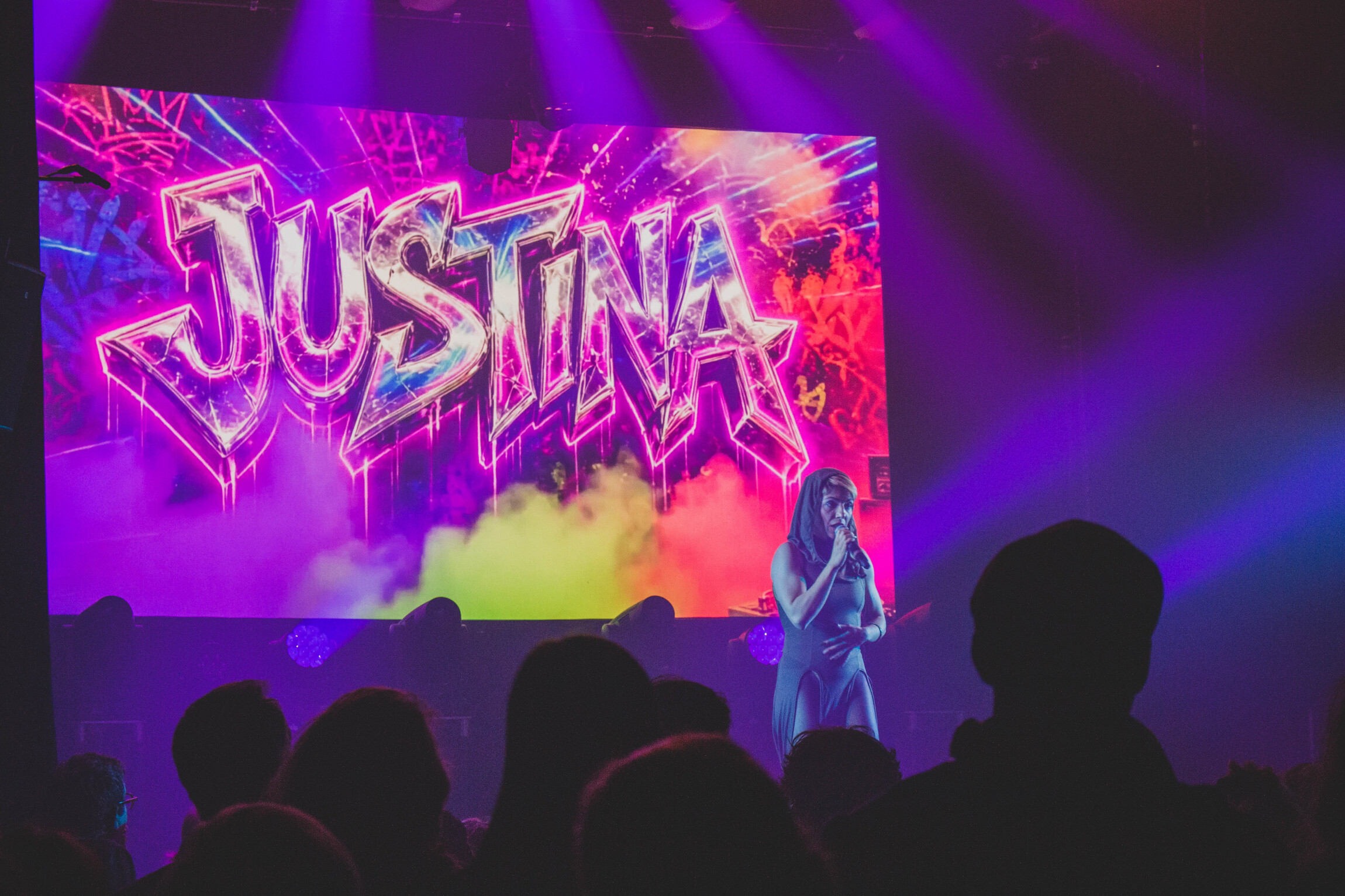
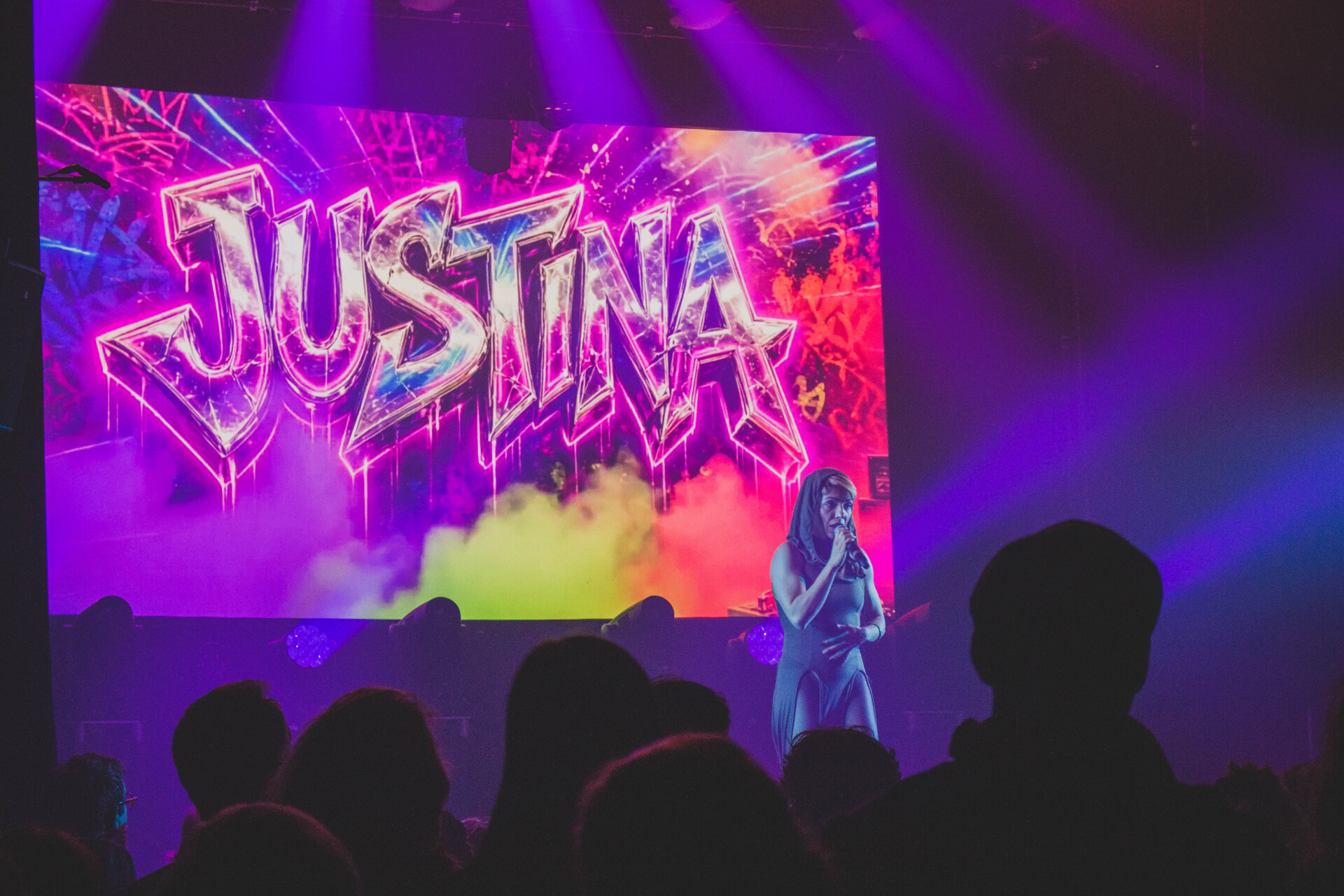
Justina est l’une des figures phares du rap militant de Téhéran, maintenant exilée en Suède. À l’occasion du Stereotrip Iran, un évènement dédié à la culture iranienne à Nantes, je me suis rendue au Stéréolux pour la rencontrer. Point de départ de notre échange : son dernier titre « BETOCHE » récemment ajouté à la playlist de Prun’.
Dans ses prods et dans ses textes co-existent le désir de sensibiliser à la condition des femmes en Iran et celui d'être une artiste à part entière. Elle y dénonce une réalité brutale, souvent universelle, mais s’en sert aussi de levier d’émancipation, de liberté, d’amusement et d’expérimentation.
Dans un contexte où la musique est un crime, comment continuer de créer ?
Comment sensibiliser à travers sa musique, sans réduire son art à ses revendications ?
Un peu de contexte :
Depuis la révolution iranienne de 1979, toute la production culturelle iranienne est contrôlée par le régime islamique. Ce dernier censure et punit le militantisme, la musique dite « occidentale ». Cela comprend notamment la musique des femmes. La loi interdit qu’elles se produisent seules sur scène face à un public, et les oblige à porter le voile. Des musicien·nes sont arrêté·es, intimidé·es, réduit·es au silence. Parastoo Ahmadi, une artiste iranienne, est apparue non voilée lors d'un concert filmé sans public, en juin 2026. Elle sera condamnée à 74 coups de fouet.
Ce 29 octobre 2026, elle a participé à faire passer des messages d’espoir en donnant un concert aux côtés de Roshani et Hassan K, elle·ux aussi irannien·nes.
Échange doublé en français par Pauline Jarry et Livie Koudouovoh.
Transcription de l'entretien en anglais par Pauline Jarry :
Why is it important for you to gather here with other Iranian artists ?
First of all hi, and thank you so much for the interview. I’m away from my country right now, so it’s really important for me to play live with other Iranian artists, not just artists. This is the first time I’m away from my country.
It’s really important to gather here because in Iran, it’s activism to be an artist. And especially if you’re a woman who raises her voice to speak up about oppression. In what ways does music hold power for you ?
Well you know, I started music in Iran. I was eighteen years old. Art always has a power. It’s not just about music. It’s about art, making something, expressing your feelings. For me, it was expressing my anger. If you don’t have the right way to release your emotions, especially anger, you will maybe find the wrong way to release it. I’m really lucky to have this talent. I can release my emotions. So, yeah, music is my weapon, you know.
Music is also about freedom of speech. You’re mostly rapping in your songs. Is rapping an effective tool for you to spread your word ?
Yeah of course. First of all, music for me is not about being famous or making money. Music is my way of expressing myself. If you listen to my music, you see that I always create when I have something to say. It wasn’t just to make something people would like, do concerts or make money. So, I don’t make music for others. I make music for myself.
‘BETOCHE’ has such a unique sound. Could you tell us more about it ?
‘BETOCHE’ means ‘it’s none of your business’. As a woman, I try to tell men - well I don’t wanna say just men - I wanna tell the patriarchy, that who I am is none of your business. If I’m a whore, if I’m not a whore. No matter what I want to do, it’s none of your business. I had a similar song called 'Chashm, yes sir ‘. It is a very feminist song. I just talk about the patriarchy, things that exist in this system for women. So ‘BETOCHE’ was the cool, sexy and sassy version, you know. I really like it because it was a really new area for me.
You mentioned 'Chashm, yes sir'. This song has a video, and I really love it. It made me realize how much of an impact images can have. Using words and showing things can feel really different. In that video you gather with different women. You escape from prison. There’s this beautiful scene where you lipsync naked together. There’s also a line which translates as ‘don’t call them women, call them trouble’, and I do think that trouble is necessary to break rules. I wanted to know if ‘trouble’ was always a source of inspiration for you ?
Yeah, of course. As a woman, an Iranian, middle eastern woman, I’ll always be trouble. Trouble for society, for the government, for religious people. It was not something I thought about myself. That’s what they thought about me because they couldn’t control me. And then I said ‘okay, if I’m trouble for you, yes, that’s what I am’.
Now you’re in Sweden. You also speak English but you mostly write in Farsi. Is writing in your language a way to feel connected to your roots ? How do you deal with the distance ?
Good question. Of course I’m really comfortable writing lyrics in Persian, in Farsi, because I’ve been doing it for a long time. But, nowadays, I’m thinking about making an album in English. I want to expand my audience. I have some plans in the future.
Speaking of languages, you have a song entitled in French with a Tunisian artist (Emeul). It’s called ‘L’amour’. I wanted to end our conversation with one of the lyrics : ‘love will take me where I need’. Your love for art did bring you here in Stereolux, and tonight is about bringing people together and finding hope. Meeting in real life is as important as being vocal online, something you also do a lot. Would you have a word to encourage people - especially artists - to speak up, online and in real life ?
If you have a talent, just use it. Express your feelings. I think this is the right way to do so. I understand artists. I know they have a lot of pressure. They overthink everything, I know that. Making art is the right way for you. If you have a talent, if you’re an artist, just do it. Don’t think about your art not being liked. First of all, you should like it. If you’re satisfied with the thing that you made, that’s it. Make kids. These things are your kids.
Thank you for this quick conversation. It was really lovely to meet you and talk to you. I’m really excited to see you tonight !
Thank you so much ! I hope that tonight will be on fire.